ZIMBA brings waste-heat innovation to Enlit Europe
18.11.2026
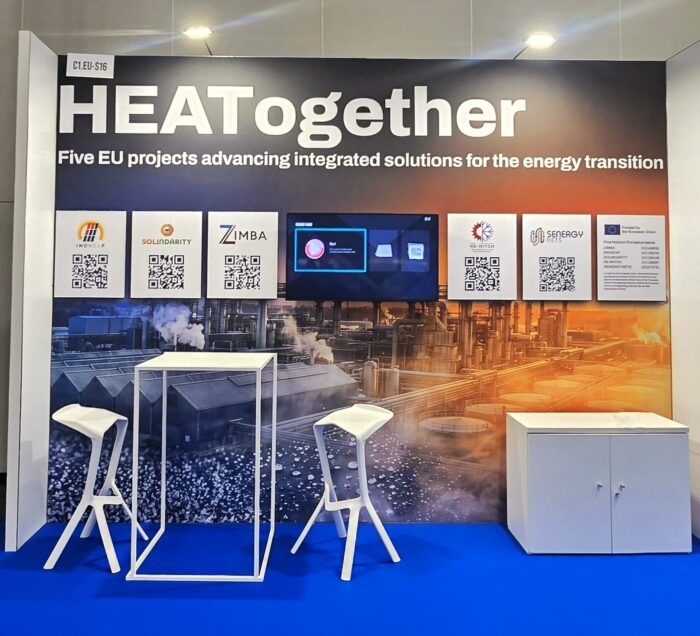
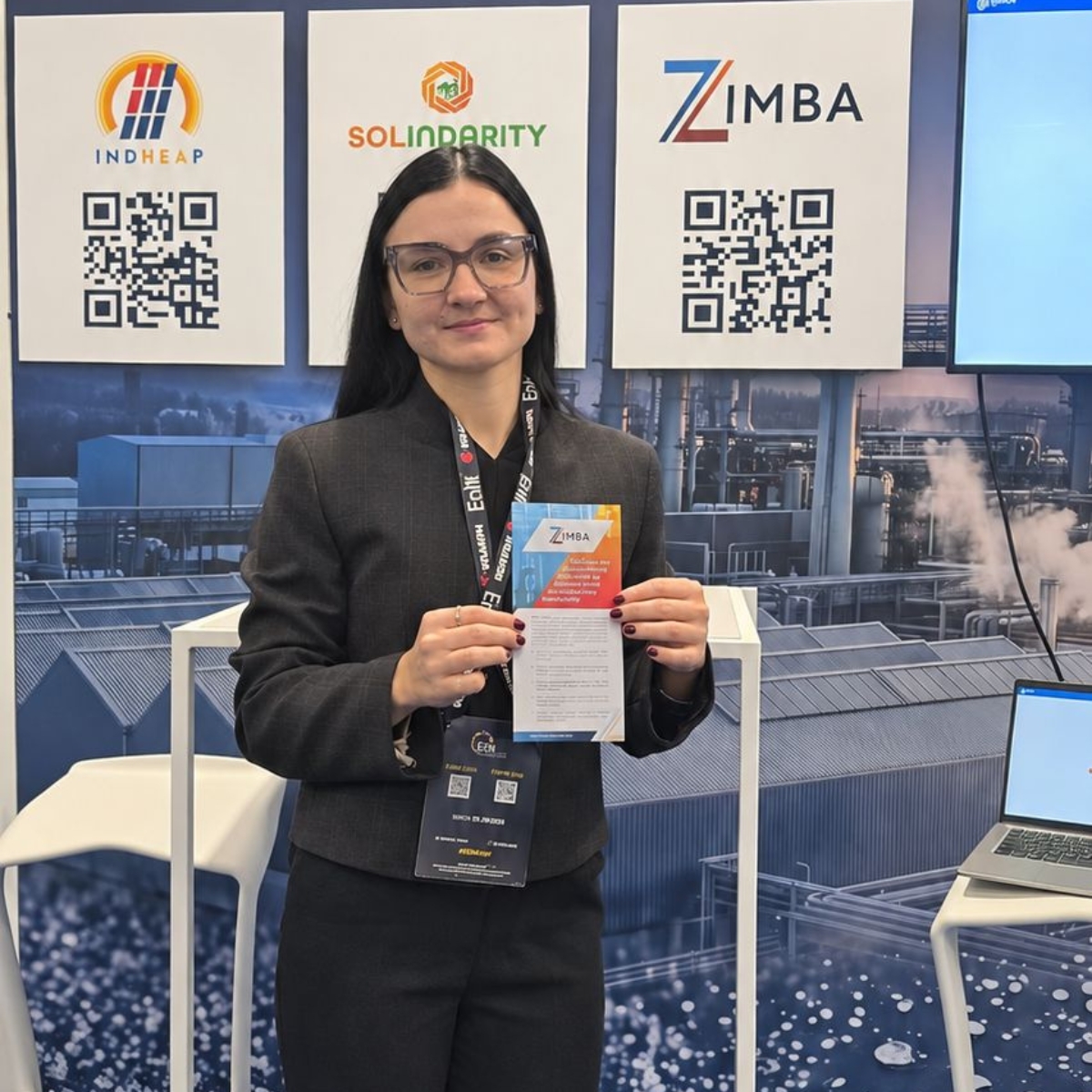
From 10 to 12 November, ZIMBA participated in Enlit Europe 2026 in Vienna as part of HEATogether, a cluster bringing together five EU-funded projects working on complementary solutions for the energy transition.
At the shared stand in the EU Projects Zone, visitors could meet representatives of ZIMBA, INDHEAP, SOLINDARITY, RE-WITCH and SENERGY NETS and explore approaches spanning industrial heat and cooling, renewable energy, waste-heat valorisation, thermal storage and multi-energy networks.
From individual technologies to integrated solutions
One of the central messages from Enlit Europe 2026 was that the energy transition cannot depend on individual technologies working in isolation.
Industrial heat-recovery systems must respond to the temperature and operating conditions of the processes in which they are installed. Renewable energy must be matched with industrial demand. Thermal storage and flexibility are needed to manage differences between energy availability and consumption. These technologies must also interact effectively with electricity, heating and cooling networks.
This systems perspective was reflected in the composition of HEATogether:
- INDHEAP develops hybrid solar systems for industrial heat and power;
- ZIMBA focuses on upgrading low-grade waste heat into useful industrial heat;
- SOLINDARITY integrates solar energy, high-temperature heat pumps, thermal storage and waste-heat recovery;
- RE-WITCH develops thermally driven technologies for industrial heating and cooling;
- SENERGY NETS explores sector coupling, flexibility and the integration of electricity, heating, cooling and gas networks.
By presenting these approaches together, the cluster gave visitors a broader view of the technologies and system-level changes needed to support cleaner and more efficient industrial energy use.
Connecting clean heat, cooling and power
On 10 November, ZIMBA also participated in the session “HEATogether: Connecting Clean Heat, Cooling and Power,” held at the EU Projects Zone Hub 2.
The session brought together speakers representing the five HEATogether projects to explore a central question: How can complementary technologies and integrated energy systems accelerate industrial decarbonisation?
Cristina-Florentina Dinca, Senior Project Manager at AMIRES, presented ZIMBA alongside INDHEAP. The two projects illustrated different but complementary approaches to reducing the use of fossil fuels for industrial heat: recovering and upgrading thermal energy that would otherwise be lost, and increasing the contribution of solar energy to industrial heat and power demand.
The panel also included:
- Claudia Vannucchi, Research Fellow at EIFER;
- Florian Mallmann, Researcher and PhD Student at Hochschule München University of Applied Sciences;
- Panteleimon Tzouganakis, Research Associate at CERTH.
The discussion was moderated by Renato Luise, Senior Research Engineer at EIFER.
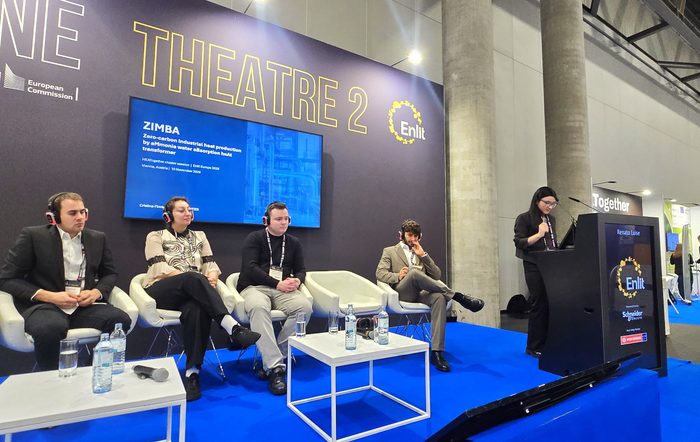
Together, the speakers covered solutions across solar heat and power, waste-heat upgrading, high-temperature heat pumps, thermal storage, thermally driven cooling, sector coupling and multi-energy networks.
Turning innovation into industrial impact
Enlit Europe 2026 focused on integration, resilience and competitiveness, highlighting the need to connect technological innovation with investment, infrastructure, markets and policy.
For ZIMBA, these discussions reinforced the importance of developing the technology around genuine industrial requirements. Successful waste-heat recovery depends not only on the performance of the heat pump, but also on the temperature and availability of the waste-heat source, the requirements of the receiving process, integration costs and the economic value of the recovered energy.
The conversations in Vienna provided an opportunity to discuss these challenges with energy professionals, technology developers, researchers and representatives of other EU-funded projects.
ZIMBA thanks everyone who visited the HEATogether stand, attended the cluster session and contributed to the discussions. The project will continue progressing towards the experimental validation of its Absorption Heat Transformer prototype.